Does making a Kiddush Hashem (acting properly in public) get someone extra credit? This year, a new “citizenship grade” will appear on student report cards, which evaluates students’ behavior both inside and outside the classroom. Through the citizenship grade, Rabbi Aaron Frank, Upper School Principal, hopes to strengthen and foster a “community of kindness and goodness” at Ramaz.
Will giving students a grade for their behavior actually change the way they behave?
In his 2024 article “Grading Students Behavior”, published in the Official Journal of the European Association of Labour Economists, Florian Schoner examines the effects of grading students on their behavior, writing, “Empirical evidence on the causal effects of comportment grading [giving a grade based off behavior that is not factored into a classroom grade] does not exist, and the theoretical case for comportment grading is ambiguous.” Schoner suggests that there is no evidence to show that citizenship grades work.
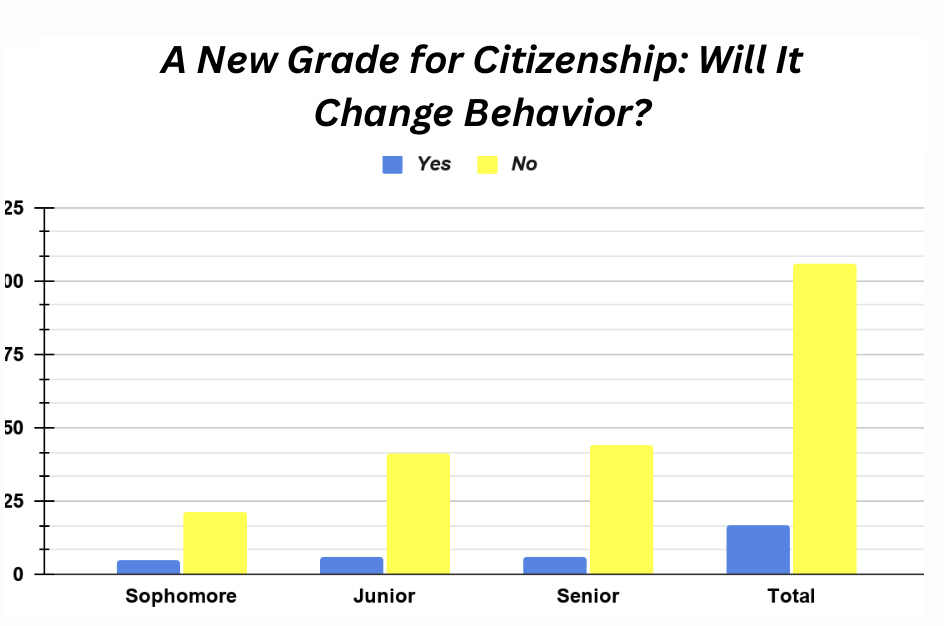
To gauge how Ramaz students expect the new grade to affect their behavior, an anonymous poll was sent to the 10th, 11th, and 12th Grade Whatsapp Chats. Of the 123 students who responded, 106 (86%) said the citizenship grade would not affect their behavior in school while 17 (14) said it would.
The results raise questions about whether the citizenship grade alone will achieve the goal of creating a “community of kindness and goodness.” The citizenship grade could carry even greater weight if it were eventually included on student transcripts. Ms. Miriam Krupka, Associate Principle, explained that the administration is “in talks” about adding the grade to transcripts which would mean that colleges could factor a student’s citizenship grade into their admissions decision. However, Ms. Dana Messinger, Dean of College Guidance, said, “I think it’s important that we have a few years of it being [on the] report card…before we think about the transcript”.
So what does being an upstanding Ramaz citizen mean?
The Administration has not yet made public the criteria for what behaviors correspond to specific grades. Students and members of the Administration have provided their own personal opinions of what constitutes proper citizenship. Natalie Safdieh `28 believes that a proper citizen “respects everybody inside and outside the classroom,”

while Anna Abergel `28 adds that, “Not getting in trouble with teachers” is part of being an upstanding citizen. Ms. Krupka explains that a proper Ramaz citizen picks up garbage in the hallways, arrives to school in dress code, and positively contributes to the overall community. Rabbi Frank defines proper citizenship as following the menschlichkeit (respect) section of the Ramaz Mission Statement.
This year is the test run of the citizenship grade and the Ramaz Administration is still ironing out the details. There are still many unknowns: will this grade effectively encourage proper decorum while only being on the report card? What does an “A” in citizenship even mean? Will the grade be added to the transcript in the near future? These questions were also asked in the 11th Grade Whatsapp chat but no one had definitive answers to any of the questions. Even though these key points are still unknown, the Administration is excited and hopeful about the citizenship grade’s impact.
https://www.sciencedirect.com/science/article/abs/pii/S0927537124000654