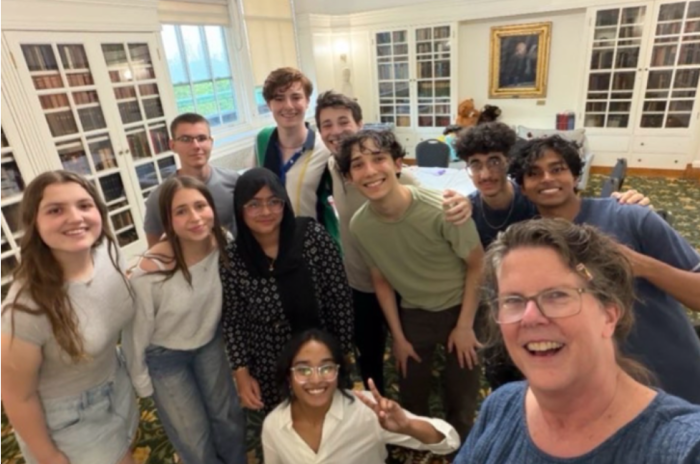
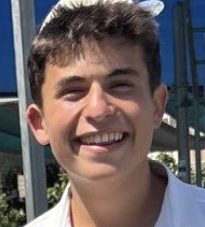
Over the summer, Gabi Flatto-Katz `27 co-founded a program for Jews and Muslims to exchange their ideas and beliefs in an open environment.
Gabi wanted the name of the fellowship, a program with a goal of building community and trust between groups, to represent the essence of the program but also wanted to find a word that had the same root in both Hebrew and Arabic. Gabi explained, “Ohel in Hebrew means tent and Ahl in Arabic means community or brotherhood…we are trying to do both things that the two parts of our name encompass [in this fellowship]… we are trying to build an ohel, build a space or a tent for people to come in and feel like they can [freely] talk…but to also build an ahl, build a community…a community of people who are in this ohel together and who talk to one another. [The people in this program] see one another as a friend who disagrees with them…”
Gabi recognized the need for such a program when he attended a debate competition in Iowa. He explained, “I was shocked that I live in New York which is the place with the most Muslims out of any part of America, and I had to go all the way out to Iowa…and that was the only time I spoke to a Muslim.”. Gabi’s brief twenty minute chat with a Muslim made him realize how sheltered he had been. Gabi craved the opportunity to speak with people from other backgrounds about “real world” conflicts to gather and hear opinions different from his own.
Gabi stressed that the program was important because typically others did not want to listen when people with opposing opinions shared their views. Additionally, Nabila Rahman `27, co-founder of the fellowship and a student at Stuyvesant said, “Programs like these are especially important for the youth because our brains are the most malleable right now…if we are stuck in one mindset, in a one-sided world view as a young person, we will keep that [attitude] for the rest of our lives” She continued, “In Islam, the only real sects we have are Shia, Sunni, and a little bit of Sufi Muslims. Hearing about the spectrum of Jewish identity at one of our sessions was really interesting to me!”
The fellowship was designed to slowly ease the participants into more political and difficult conversations. The first meeting began with a volunteer who shared a hypothetical story and then the fellows debated who in the story was right and who was wrong. As the sessions progressed, Gabi raised more political conversations about war and the question that shifted the conversation into a more intense environment was, “How do we think that the ideas of war/ the histories of war [that we inherit intergenerationally through family stories and from our grandparents and parents]… affect the way that we look at conflict today?”
After the fellowship discussed the Israel-Palestine conflict, they delved into the history of both the Jewish and Islamic claim to Israel. To go along with that discussion, they took a guided tour of the Met displays of the Islamic art and culture. Madiha Bukhari `26, recent graduate of Bronx Science High School and co-founder of the fellowship said that through these sessions she learned “…So much about early Islamic History and the start of Zionism.”
Gabi decided to take action to address the issue of many students being sheltered. He explained that in order for real change to happen it has to start with communication.