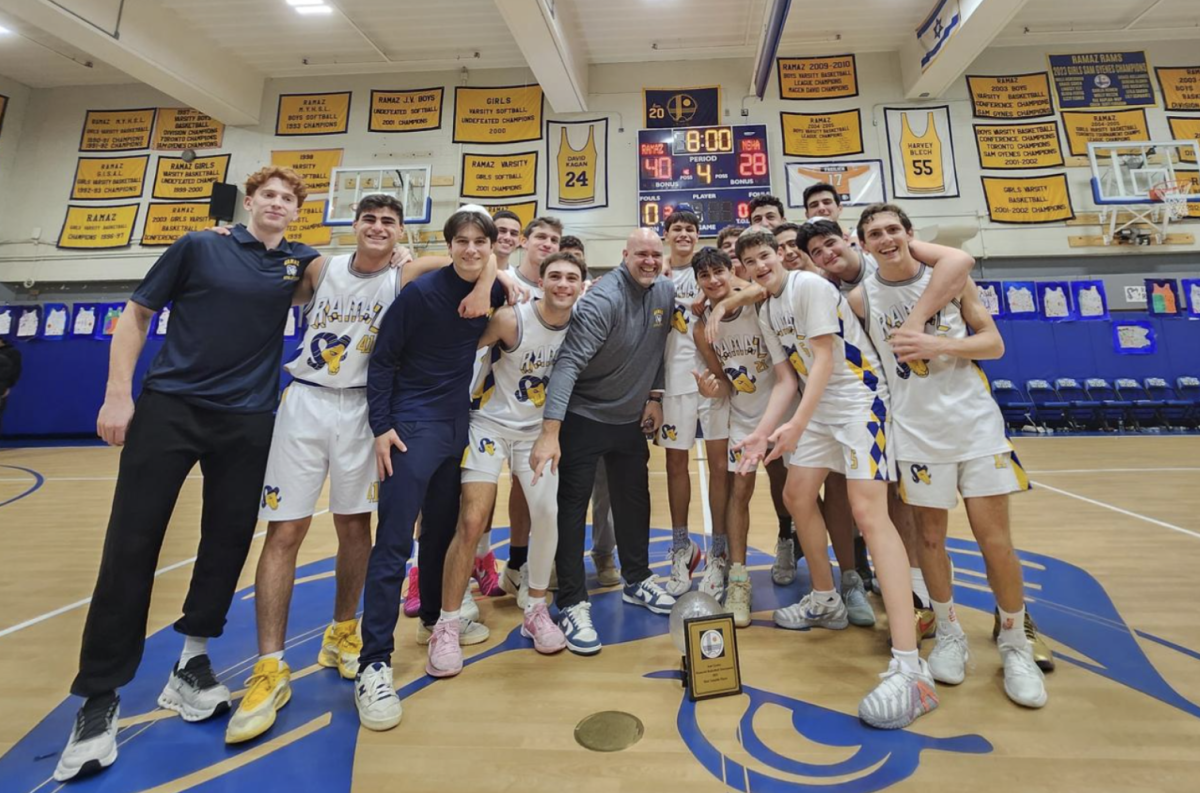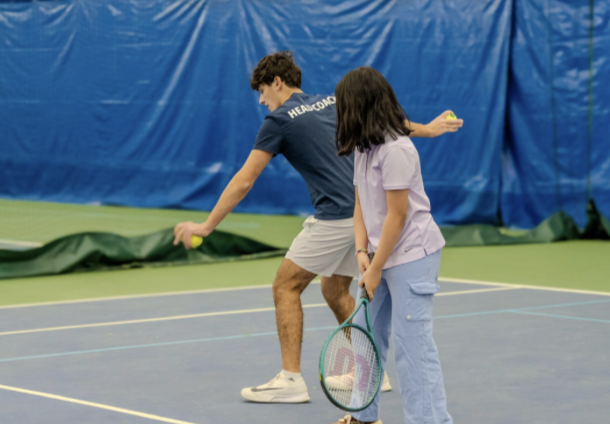
Harry Honig ’27 has been named a regional honoree for the 2026 Billie Jean King Youth Leadership Award, an ESPN honor given to young people who use sport to drive social change. The award, announced via ESPN press release ahead of the July 15 ESPYs broadcast, comes with a charitable grant for Together Sports, the youth sports nonprofit Honig founded in 2024.
Honig learned he’d been selected while alone in his room, checking email. “I was skeptical at first because I could just not believe it,” he said. “It’s the kind of recognition that made the last few years of work feel validated in a really concrete way.”
Together Sports provides free coaching, equipment and court access to kids who might not otherwise have them. The idea traces back to Daniel Davis, Honig’s coach at the Harlem Junior Tennis and Education Program, who died in September 2020. “He gave the same attention to a beginner as he did to elite players, and he’d give up weekends with his own family to take Harlem kids to tournaments so they’d get the same opportunities tennis gave him,” Honig said. He kept competing for a few years afterward, but the sport stopped feeling the way it once had. “In 2024 I finally realized I could make a bigger difference building something than winning another match,” he said. “So I started with one kid, on one court in the Bronx.”
That first session, with a student who had asthma, forced him to adjust on the spot—fewer sprints, more breaks. “What surprised me most was how much that one session meant, not just to the kid, but to me,” he said. “It was the first time I felt like I was actually continuing something instead of just missing it.”
What convinced him the program mattered, he said, wasn’t a single moment but a pattern: kids who’d never been coached before started showing up week after week. “That’s when I understood this wasn’t just about keeping kids busy, it was about giving them something steady to count on,” he said.
Three people at Ramaz shaped how the organization grew, Honig said. Head of School Dr. Wasserman pushed him to think about long-term sustainability rather than short-term wins. Dr. Block connected Together Sports to the school’s Thailand mission trip, where Honig gave his own Together Sports T-shirt to a boy named Namo. A week later, he heard Namo was wearing it while leading games with his friends. “That’s the one that stayed with me, because it wasn’t about the hours I spent with him,” Honig said. “It was what he did with it after I was gone.” And Leah Silberstein, he said, “shaped how I think about the story behind the work,” pushing him to see that the organization’s impact isn’t just in the numbers—”it’s in the sense of belonging kids get from being part of something.”
Honig came up through a junior program once led by Katrina Adams, who later became president of the U.S. Tennis Association, which shapes how he sees the King award. “Billie Jean King’s entire legacy is about using sports to break down barriers and create equity,” he said. “Having her name attached to Together Sports feels like confirmation that the mission we’ve built, making sports accessible regardless of income, is part of something much bigger than me.”
The $2,500 grant—part of a roughly $7,500 annual budget funded by grants, donations and in-kind support—will cover about $1,400 in equipment and $1,100 in court and facility fees, extending programming to chapters in Texas, Ohio and India. Honig said he had to sit on the news under embargo, even while writing about Together Sports for other purposes. “I kept having to leave it out,” he said. “But the embargo was in place until right before the ESPYs broadcast, and I understood why that mattered, so I sat on it. It made the actual announcement feel more meaningful.”
Asked to describe Together Sports in a sentence, Honig didn’t hesitate: “Together Sports is a nonprofit that removes the three things that keep kids out of sports: cost, equipment, and access to real coaching, by making all of it free.” He pushed back on the idea that youth sports nonprofits are just recreation. “What we’re actually running is a coaching model, our coaches are trained in Sports-Based Youth Development, which is a real methodology, not just showing up with a bag of balls,” he said, adding that free doesn’t mean lower quality: “We give away equipment and coaching for free specifically so the quality doesn’t depend on what a family can pay.”
Now class president heading into senior year, Honig treats the nonprofit like a job—weeknights for outreach, weekends on-site—but credits its growth to letting go of the coaching himself. “I’ve trained 26 coaches and chapter leaders who run programming without me,” he said. “If I were still the only person coaching, this would have capped out two years ago.”
Dr. Wasserman assigned him case studies on two youth-focused founders confronting what comes after early success. “I stopped focusing on what we’d accomplished and started thinking about whether Together Sports outlasts me,” Honig said. “That’s the problem I want to keep working on in college and after.”
He measures future success the same way. “If Together Sports is still running free, high quality programming long after I’ve moved on, and I’m just one name in its history, that’s the version I’d consider a success,” he said. His advice to a freshman with a similar idea: “I started with one kid on one court in the Bronx, no organization, no plan, no 501(c)(3). The consistency is what turned it into something, not the idea. Most people with good ideas never take the first step, and the first step is always smaller than you think it needs to be.”