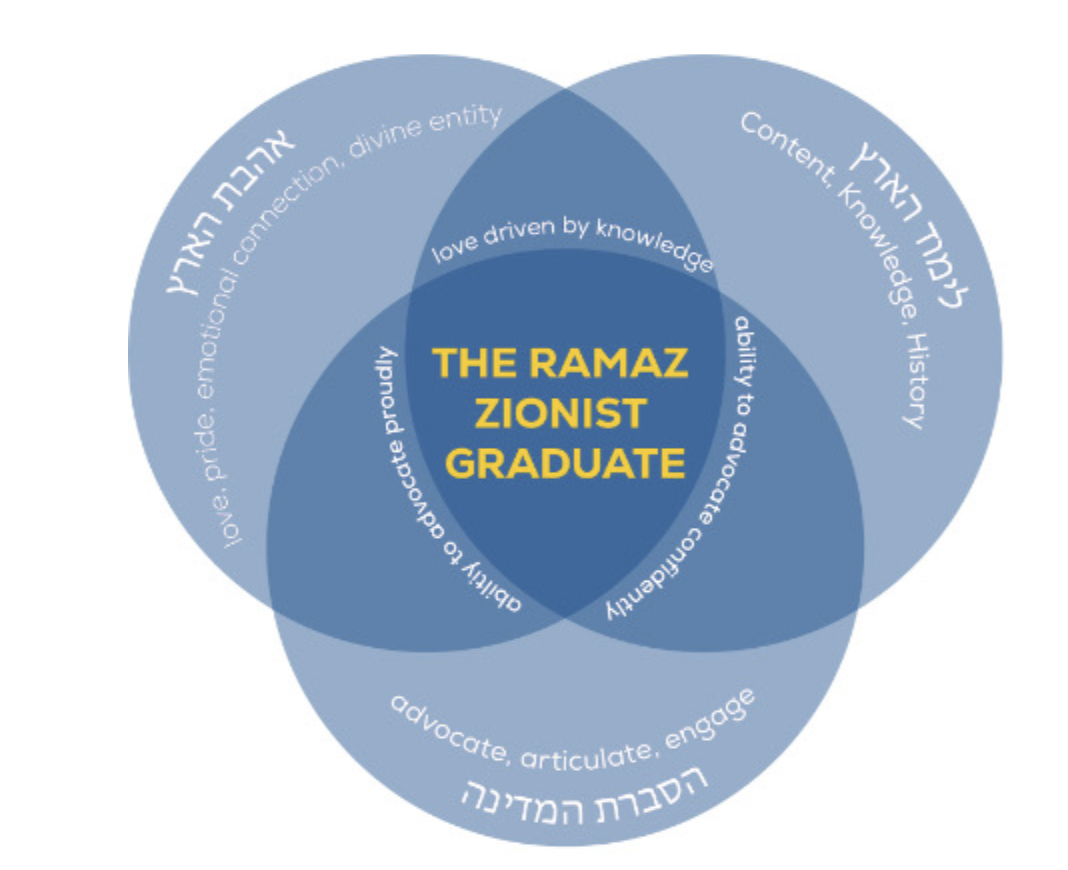
The Understanding Israel course was created post October 7th, 2023, aiming to instill students with a love, respect, and understanding of Israel and its complex historical and political issues surrounding it. Through the program, Ramaz administrators hope that students will become knowledgeable about Israel, will learn to further love the country, and will want to advocate for Israel. The class meets one period once a week, which some feel is inadequate to truly “understand Israel.” In addition to the infrequency of the class meetings, once a week classes can be challenging, as it is difficult to reach a flow of learning from class to class.
Rabbi Aaron Frank, Upper School Principal, explained that the class was created because he, along with fellow administrators, “thought there was a need to have more time focused solely on understanding the history of Zionism and the dynamics of the modern State of Israel.” Once they decided to make the class a reality, a mixture of history teachers, Hebrew teachers, and other teachers interested in this topic volunteered to teach the class. Since the beginning of the class in 2024, the class has evolved significantly. Instead of such a broad selection of teachers teaching the class all in different ways, the class is now solely taught by Dr. Donna Herzog, Dr. Naya Lekht, and Ms. Hadar Yaday. Additionally, the class is now full year instead of one semester, and has a fully planned curriculum meant to span the three years from freshman to junior year. When asked if he believes if meeting once a week is enough for this subject, he answered, “With everything, the more meeting time you have, the more quality it’s going to be. Of course all of us would like more time, but at the same time, we have so many subjects and so many curricular priorities, so, for now, this is what we have, and we may relook at it in the future.”
Dr. Donna Herzog, a history teacher, teaches Understanding Israel to 9th and 11th grade students. She enjoys teaching Understanding Israel and has learned that her students have immense love for Israel, its people, and a great appreciation for the IDF and its contributions. When asked what she hopes her students learn, she responded “I hope that they learn nuance. I hope that they learn how to articulate themselves well. I hope they learn that loving their country, that loving America, that loving Israel, means also loving it for its complex history.” When asked what she thinks of the once-a-week format of the class, she responded “I think it’s difficult. I think it’s difficult for continuity to exist. I mean every class is 37 minutes, but I think that once a week makes it a little bit more difficult. And I would love to see that more than once a week, but we’re constrained by time.”
Students enrolled in Understanding Israel have varying opinions on whether once a week is adequate. When asked whether understanding Israel should be more than once a week, freshman Ivri Nahari, said “Yes, I do think so, because there is not enough class time to have a test, or any real way to see if the students understand the class.” In response to the same question, sophomore Uzi Garren, said “No, since the true assessment of what we learn in Understanding Israel is how we apply our knowledge when faced with antisemitism outside of school.” Sara Kleinhaus, an 11th grader, said “I think that although in an ideal world we would have more time to learn about Israel, it really just isn’t possible with all of the other classes that we need to take, and free periods shouldn’t be sacrificed for more Understanding Israel. In terms of quality, obviously classes that meet once a week are going to be harder because there is less of a flow, but in this case, especially now that it is a three year curriculum, having Understanding Israel more than once a week is not necessary.”
While some students and teachers have different views on how often the class should meet, many on both sides of the argument agree that the class is valuable and very important. Ultimately, the success of a subject like Understanding Israel isn’t measured by the number of minutes you spend learning it in a classroom. True success of the class is measured by if and how much the students fulfill the teacher’s goals and hopes for them. As of now, the students of the Ramaz Upper School will continue to balance Understanding Israel with the other 11 subjects on their weekly schedule.