“And if one day I die, before my time has come, I want you to celebrate life, not mourn my death.
I want you to wake up every morning with a smile on your face and longing in your heart.”
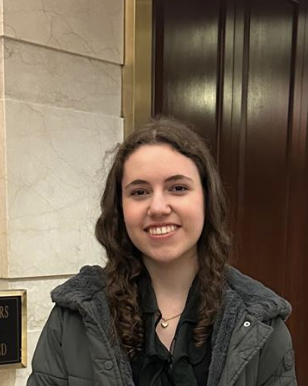
Adi Baruch, an IDF staff sergeant reservist, wrote those lines to her boyfriend, Nevo Yanay. Those lines have taken on new meaning since she was killed by a rocket in Sderot on October 12, 2023 – five days after the October 7 Hamas massacre. In the wake of the attacks on Israel, Baruch had lobbied to be drafted, leaving behind words that her boyfriend, Nevo Yanay, now 25, still reads every morning.
His grief is powerful and deeply personal, yet for years Israel’s formal grief system excluded relationships like his.
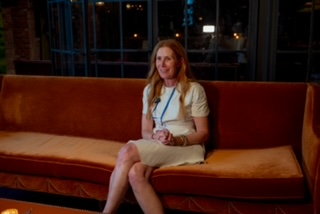
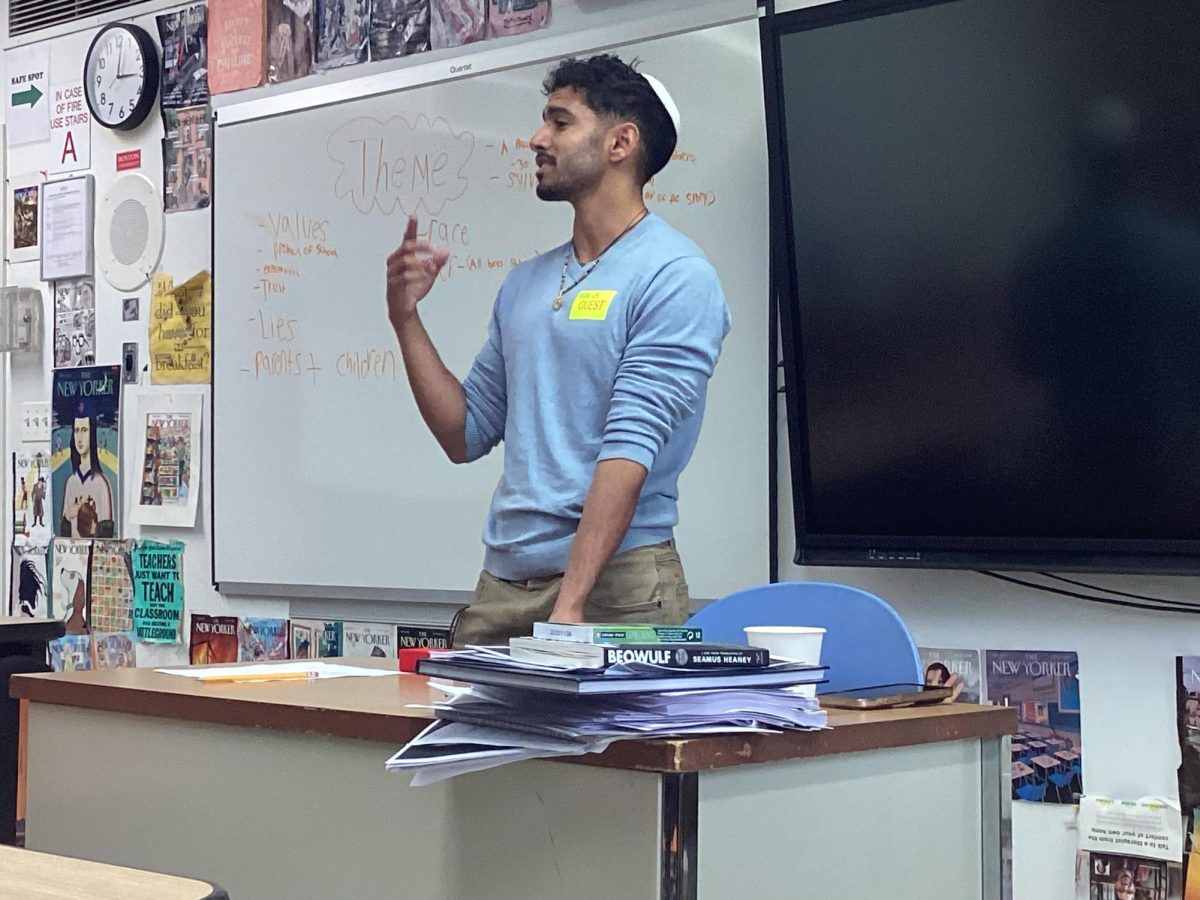
That exclusion is what brought Nevo, together with veteran GFIDF (Partners of Fallen IDF Soldiers) volunteer Susi Doring Preston to the Ramaz Upper School in late October. Doring Preston lost her fiancé, Tsiki Eyal, 11 years earlier while he was serving in the reserves in the West Bank.
Both spoke to students about the formation of GFIDF and their message was clear: until recently, unmarried partners of fallen soldiers mourned in isolation and without public recognition.
With intense publicity and ultimate partnership with the IDF, “We’re here to tell that story,” Doring Preston told students. “It’s a necessary organization for the health and well-being of Israeli society. There’s a lot of trauma.”
GFIDF was founded in 1998 by Phyllis Heimowitz and her daughter Tamar Heimowitz-Richter, after Tamar’s sister Michal lost her fiancé, an IDF soldier, in 1997. Although Michal was engaged, the IDF only recognized legal spouses and blood relatives.
So Tamar created GFIDF, which for more than two decades has given unmarried partners a place to turn, offering therapy, peer support, and community to those whose grief has historically been dismissed.
As Doring Preston explained, “They’re still very much affected by the loss of their partner, but socially, it’s not recognized. When we’re young, it’s too normal to dismiss our feelings and say, ‘You’ll find someone else.’ But that’s not the point of grief.”
Since the October 7 attacks, the number of bereaved partners has soared. “We are now in touch directly with the bereavement officer of the IDF, who contacts our CEO, and we reach out immediately to the partner,” Susi said. GFIDF has welcomed over 335 new members, an unprecedented increase.
“Over 50 percent of the soldiers who fell on October 7 had girlfriends or boyfriends,” she added.
Yanay is among them. He had planned to propose to Adi before her death. “She was my whole life. We were inseparable,” he said. “Each morning I’d wake up and think, this is not a nightmare, this is my life.”
Unlike in previous years, GFIDF reached out to him during Shiva. He describes that moment as “the first time I felt seen.” Through therapy and group sessions, he met others who truly understood.
“That was the first time I saw another person who felt exactly like me. Devastated, in shock. And that made it a little bit easier,” he said.
Thanks to GFIDF’s advocacy, the IDF now requires casualty officers to ask families whether a soldier had a partner. If the family agrees, the partner receives a formal notification and is connected to GFIDF. This is a big shift from earlier years, when many heard the news through social media or not at all.
The organization continues to push for further recognition, including time off during Shiva, inclusion in memorial ceremonies, and humane acknowledgment of the partners’ grief.
For Yanay, this recognition has been life-changing. He is still “learning what life is like without Adi,” but the support he has received through GFIDF is helping him take steps forward. Adi’s words continue to guide him:
“Don’t let a single second of your life go to waste. See the world for me. Appreciate every little moment. And every once in a while, smile at the clouds. I’ll be there.”
Because of this organization, living by her words feels possible. Sharing her story allows him to keep her memory present and alive. “Talking about her makes me feel like she still lives in me,” he says. “When I speak about Adi, it makes me feel like you know her too.”